How Daylight Saving Time Works in the United States
Understand daylight saving time, what DST means, which clocks change, and how the federal rules and state exceptions fit together.
Daylight Saving Time (DST) is a federal system that shifts clocks forward one hour in spring and back one hour in fall to make better use of daylight. It is designed to conserve energy, reduce traffic accidents, and support outdoor commerce. The practice is coordinated nationwide, but a few states and territories opt out, creating a patchwork of observance across the United States.
Daylight saving time vs. standard time: the basic distinction
Standard time refers to the time zone’s baseline offset from Coordinated Universal Time (UTC) that applies during the winter months. For example, Eastern Standard Time (EST) is UTC‑5. Daylight saving time, on the other hand, adds one hour to that offset, so Eastern Daylight Time (EDT) is UTC‑4. This one‑hour shift means that sunrise and sunset occur an hour later on the clock, extending evening daylight. The distinction is purely a matter of clock setting; the underlying UTC offset changes only when the federal rule is applied. All U.S. time zones that observe DST follow the same pattern: the clocks move forward 60 minutes at 2:00 a.m. local standard time in the spring and move back 60 minutes at 2:00 a.m. local daylight time in the fall. The practice is codified in the Uniform Time Act of 1966, which mandates the dates and times of the shifts and allows states to opt out. Because the shift is a legal and administrative change, not a natural phenomenon, the terminology “standard time” and “daylight time” is used consistently across federal documents, news reports, and time‑keeping services. The key takeaway is that DST is an intentional, temporary adjustment to the standard time offset, designed to provide more usable daylight during the longer days of summer.
Why the clock shifts happen in March and November
The federal schedule for daylight saving time is set by the Uniform Time Act, which specifies that the shift forward occurs on the second Sunday in March and the shift back occurs on the first Sunday in November. These dates were chosen to balance several practical considerations. In March, the second Sunday is selected to avoid the early‑spring weather extremes that can occur on the first Sunday in many regions. By moving the clock forward at 2:00 a.m., the transition happens during a low‑activity period, minimizing disruption to transportation, commerce, and daily routines. The second‑Sunday rule also aligns with the start of the U.S. federal fiscal year, which begins on October 1, providing a clear temporal marker for budgeting and reporting. The first Sunday in November was chosen for the fall back because it falls after the peak of summer activity and before the onset of colder weather. The shift back restores the earlier sunrise and sunset times that are more suitable for winter daylight patterns. Additionally, the November transition occurs before many holiday travel peaks, reducing congestion on roads and at airports. These specific dates have been in place since 1967, after the 1966 Act was amended to standardize the schedule nationwide. The consistency of the March and November transitions helps businesses, schools, and government agencies plan for the annual change without regional variation in the timing of the shift.
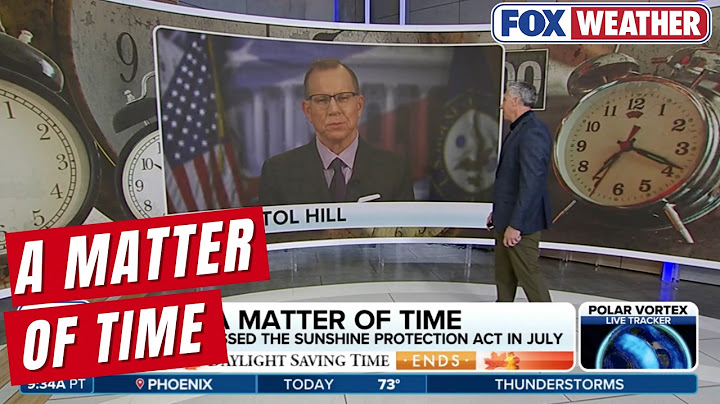
What DST means in a time-zone abbreviation
Daylight Saving Time (DST) is reflected in the abbreviation that follows a time‑zone designation, such as "EST" for Eastern Standard Time and "EDT" for Eastern Daylight Time. The abbreviation signals whether the local clock is set to the standard time, which aligns with the mean solar time of the zone’s meridian, or to the daylight time, which is one hour ahead to make better use of evening daylight. The shift occurs on the second Sunday in March, when clocks are advanced one hour at 2:00 a.m. local standard time, and on the first Sunday in November, when clocks are set back one hour at 2:00 a.m. local daylight time. The change is purely a convention; it does not alter the underlying geographic boundaries of the time zone. Instead, it temporarily adjusts the offset between local time and Coordinated Universal Time (UTC) by one hour. For example, the Eastern Time Zone normally observes UTC‑5 during standard time and UTC‑4 during daylight time. The abbreviation change is a concise way for schedules, software, and legal documents to indicate which offset is currently in effect.
How the federal schedule works for most of the US
The federal government sets the DST schedule for the United States through the Uniform Time Act of 1966, amended in 1986 to shift the start and end dates to the second Sunday in March and the first Sunday in November. This act applies to all states and territories that choose to observe DST, with the federal government itself following the same dates. The act allows each state to opt out of DST; the only state that has done so is Hawaii, which remains on Hawaii Standard Time year‑round. The federal schedule is implemented nationwide by requiring all federal agencies, courts, and federally regulated industries—such as airlines, railroads, and financial markets—to adjust their operations to the new time. State and local governments may also adopt the federal dates, but they retain the right to set their own observance dates if they wish to deviate. In practice, the vast majority of the country follows the federal schedule, so the second Sunday in March and the first Sunday in November are the dates when clocks are set forward and back, respectively. This uniformity simplifies interstate commerce, travel, and broadcasting, ensuring that schedules remain consistent across state lines.
Why exceptions exist and how to recognize them
Daylight Saving Time (DST) is a federal policy that shifts clocks forward one hour in the spring and back one hour in the fall to extend evening daylight. The federal framework, established by the Uniform Time Act of 1966, allows each state to opt out of the practice. The primary reason for these exceptions is geographic and economic considerations. States that lie far north, such as Alaska and Hawaii, experience significant variations in daylight across seasons and find the time shift less beneficial. Similarly, regions with unique economic ties—like parts of Arizona that rely on cross‑border commerce with California—opt out to maintain consistency with neighboring markets. Recognizing an exception involves checking whether a state has formally adopted a “permanent standard time” or “permanent daylight time” policy. This information is typically published by the state’s Department of Transportation or a similar agency and is reflected in federal time zone maps. The U.S. Department of Transportation’s Time Zone Map, updated annually, clearly marks states that do not observe DST, using a distinct color or shading. By consulting this map, readers can quickly determine whether a given location will change clocks or remain on a single time year‑round.
Where readers should check dates, laws, and local rules
Because DST dates can shift due to federal legislation or state‑level adjustments, readers should consult authoritative, up‑to‑date sources before planning activities that depend on precise timing. The U.S. Department of Transportation’s official website hosts the most recent federal DST schedule, including the start and end dates for the current year. For state‑specific rules, each state’s official portal or the state’s Department of Transportation provides the legal text and any recent amendments. Local municipalities often publish notices in their official gazettes or on city council websites, especially when a city adopts a temporary change for a special event. In addition, the National Institute of Standards and Technology (NIST) maintains a comprehensive database of time zone information that includes historical changes and future projections. By cross‑referencing these sources—federal, state, and local—readers can confirm the exact dates and any exceptions that might apply to their region. This multi‑layered approach ensures that travelers, businesses, and residents remain synchronized with the correct timekeeping practices.
Related reading
Daylight Saving Time 2026: US Start and End Dates
How to Set Clocks Back in Fall—and What Happens
Spring Forward Explained: How the Clock Change Works
