What Are Midterm Elections in the United States?
What are U.S. midterm elections? Learn why all House seats and only some Senate seats are on the ballot, plus what the results can change.
What Are Midterm Elections in the United States?
FACT-CHECKED OCTOBER 31, 2026 • US ELECTION GUIDE
A midterm election is a U.S. congressional election held halfway through a president's four-year term. Americans vote for every House seat and roughly one-third of the Senate. Midterms also commonly feature governors, state legislators, local offices and ballot questions, depending on the state.
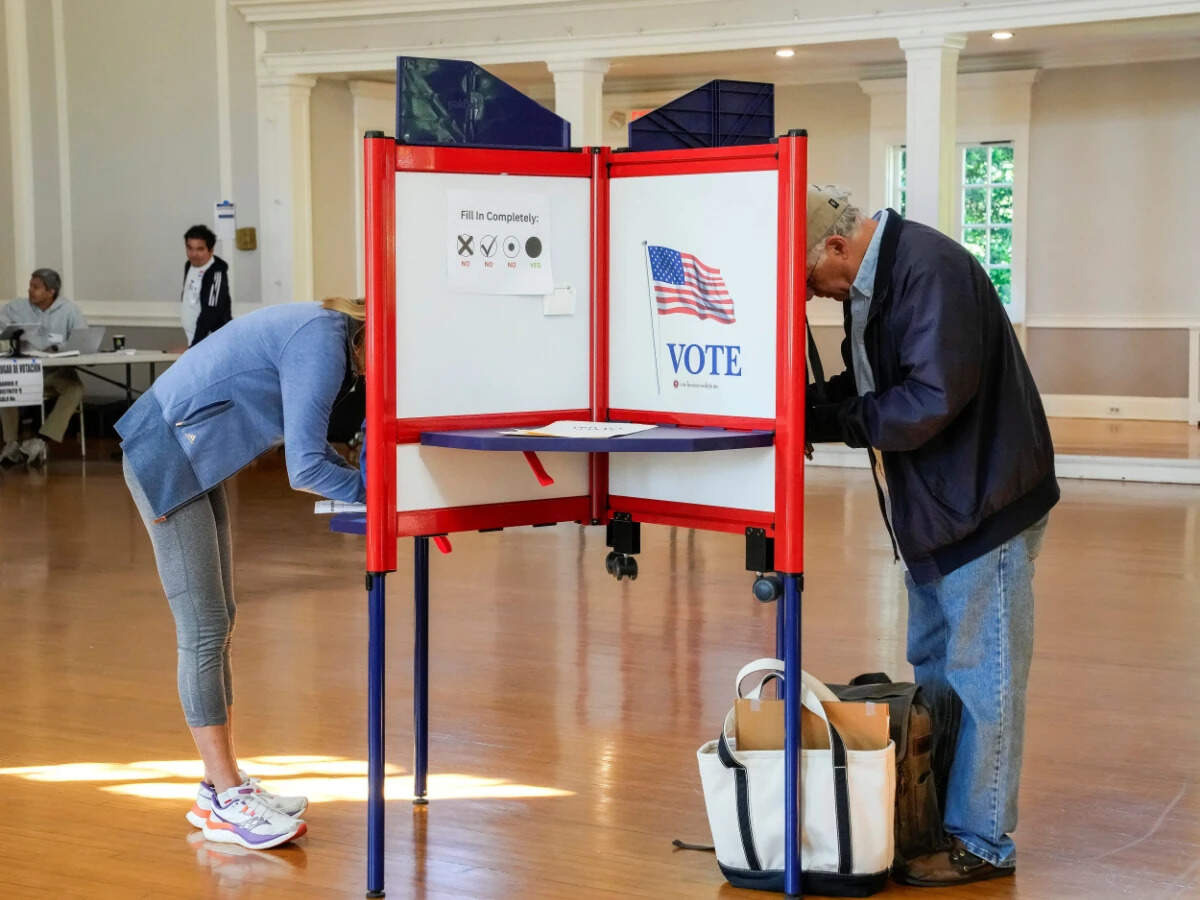
The next midterm general election is Tuesday, November 3, 2026. Understanding why it takes place—and why the ballot differs by state—is more useful than memorizing campaign slogans.
Midterm elections, explained in 30 seconds
The United States holds federal congressional elections every two years. In presidential-election years, voters select a president and choose members of Congress. In midterm years, the president is not on the national ballot, but congressional elections continue. The word 'midterm' describes the timing within a presidency, not a special or secondary type of voting.
The House and Senate make federal laws, approve budgets and oversee executive agencies. Which party controls each chamber can influence the agenda even while the same president remains in office.
Why midterms happen halfway through a presidency
Presidents serve four-year terms while House members serve two. The mismatch guarantees a federal House election at the midpoint of every presidency. A typical cycle is presidential election, then midterm two years later, then another presidential election.
Election Day is set by federal law: the Tuesday after the first Monday in November in even-numbered years. That means an election does not always fall on the first Tuesday of the month. The exact date in 2026 is November 3.
Why every House seat is contested
The Constitution provides for a two-year term in the U.S. House. Its 435 voting seats are distributed among states by population. Representatives run in geographic districts; residents vote only for the district where their registered address belongs. As a result, all 435 districts are on the ballot during each regular federal election year.
A candidate who wins a House seat normally takes office on January 3 of the following odd-numbered year. Midterm results therefore change the membership of the next Congress, not instantly the composition of the House on election night.
District borders may change after redistricting. A resident's voting district and currently serving representative may differ during a transition, as illustrated by congressional maps prepared for the 2026 Texas and California elections.
Why only some Senate seats are contested
Senators serve six-year terms, with elections staggered across three classes. Roughly one-third of the Senate's 100 seats comes up every two years. A state elects two senators overall but typically votes for only one of those seats in a particular regular cycle.
Special elections can add contests when an unexpired term needs to be filled, so not every news headline uses the same Senate race count. In 2026, there are 33 regularly scheduled Senate contests plus two special elections—35 contests in total.
This system gives the Senate more continuity than the House because many incumbents continue serving through an election in which their own seats are not contested.
What midterm results can change
Congress determines which bills receive hearings and votes; majorities also shape committee leadership, oversight investigations and the budget process. A president can still propose policies, but lawmakers decide whether legislation reaches the president's desk.
Beyond Washington, many states elect governors, attorneys general, legislators, judges and local officials in the same year. Those elections address different powers and should not be confused with federal congressional control. Oklahoma and Tennessee, for example, publish separate ballots and voting schedules administered by their state election agencies.
Turnout and the mix of voters can differ from presidential years. That is one reason analyses comparing elections should use the correct year, district boundaries and offices rather than simply copying presidential results.
Midterms versus presidential elections
The clearest comparison is the office on the ballot: a presidential election selects the president and Congress, while a midterm selects Congress but not the president. State and local races may accompany both. House terms remain two years in either case, and senators keep six-year staggered terms.
Neither kind of election guarantees one party a majority. A split result can produce one party controlling the House, another controlling the Senate, and a president from either party. That is a possible institutional outcome, not a malfunction of the voting system.
To understand the specific 2026 arithmetic without confusing it with this general civics lesson, use the separate guide to who will control Congress after November 3.
Frequently asked questions
How often are midterm elections held?
Every four years, two years after a presidential election. Congress itself is elected every two years.
Do Americans elect a president in the midterms?
No. A regular midterm does not elect the U.S. president.
Why does my state not have a Senate race this year?
Only about one-third of Senate seats are regularly contested in any two-year federal election cycle.
Related election guides
These articles answer different questions about the 2026 election:
2026 House and Senate balance of power
Georgia Senate candidates and voting dates
Mike Johnson’s Louisiana district challengers
Reporting note: Information reviewed October 31, 2026. Candidate lists, district plans and vote reporting can change. Check official state election records before publication and whenever this article is updated.
