Who Will Control the House and Senate After the 2026 Midterms?
Who could control Congress after November 3? Understand the 2026 House and Senate races, seat math and how to follow verified election results.
Who Will Control the House and Senate After the 2026 Midterms?
FACT-CHECKED OCTOBER 31, 2026 • US ELECTION GUIDE
As of October 31, 2026, neither party has won the November midterm elections. U.S. voters will decide all 435 House districts and 35 Senate contests—including two special elections—on Tuesday, November 3. Control of the chambers will depend on races across the country, and close contests may remain unresolved after election night.
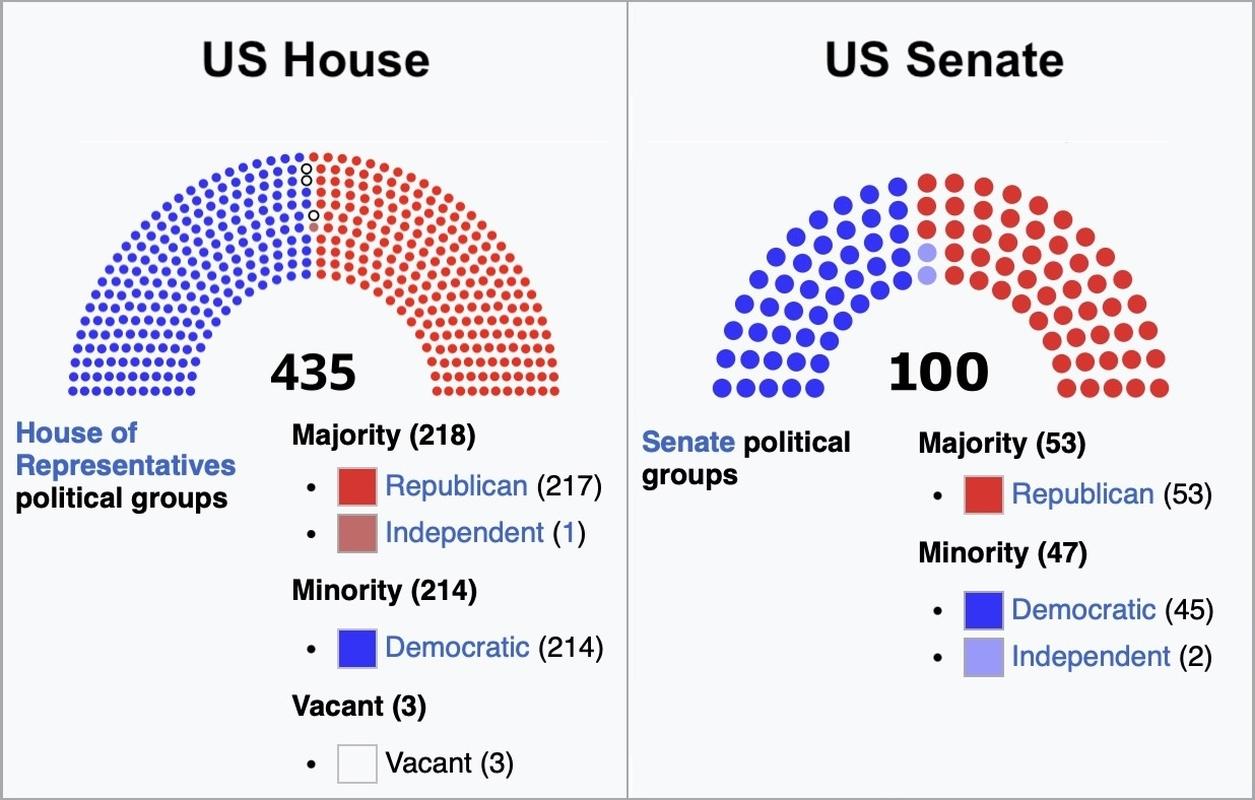
Republicans currently hold the Senate majority. The House is also under Republican control, but its narrow margin makes a change possible. This guide separates the arithmetic of a majority from predictions, vote counts, projected winners and eventual certified results. It will need a factual update when polls close.
What is known as of the latest update?
Checked October 31, 2026: The Senate's 119th Congress composition is 53 Republicans, 45 Democrats and two independents who caucus with Democrats. The current House balance is narrower and can move with vacancies and appointments, so any exact House tally should be accompanied by the date and source from the House Clerk. No 2026 result can be counted as final yet.
The critical distinction is between the Congress serving today and the one that will convene on January 3, 2027. The latter will be determined by November voting, any required runoffs and the completion of election administration. A poll showing a party ahead is evidence about expectations—not evidence that the party won seats.
Election Day: House and Senate races on the ballot
Every voting district will elect a U.S. House member for a two-year term. For the Senate, 33 seats are regularly scheduled for election and two additional special contests bring the election-year total to 35. Because senators serve staggered six-year terms, most Senate seats will not appear on November's ballot.
Votes are cast under state election rules. Different closing times, rules for counting absentee ballots and potential runoffs mean there is no single moment when all contests become official. For instance, Georgia has a December 1 runoff date if a majority is not reached; Louisiana may hold a December 12 congressional runoff. Those possibilities matter when tallying control.
House control: seats and majority math
A full 435-member House requires 218 seats for a majority. Vacancies can change how many members are actually serving and the threshold for a vote inside the chamber, but 218 is the familiar post-election election-night target when all districts are filled. Avoid treating today's party breakdown as a prediction of the next Congress.
A practical way to follow the House is to sort races into incumbents defending districts, open seats and contests involving changed district boundaries. Keep national seat forecasts distinct from actual wins. One individual race—even a prominent incumbent's—is a small part of a 435-seat puzzle.
If a dashboard lists a seat as 'lean,' 'likely' or 'toss-up,' it is assigning a probability or category, not recording a ballot count. A seat should move into the winners column only after a credible call or official reported result and should be labeled accordingly.
Senate control: seats and majority math
The Senate has 100 seats. A party generally needs 51 votes for an outright majority, while a 50–50 Senate can be controlled by the party of the vice president, who casts tie-breaking votes. The two independents currently caucus with Democrats, which is why some Senate graphics show a 53–47 partisan-caucus balance rather than simply counting party registration.
With 53 Republican seats before the election, Democratic-aligned candidates would need a net gain of four seats for a 51-seat caucus majority. A net gain of three could instead produce a 50–50 chamber, in which control depends on the vice president. These are arithmetic scenarios, not predictions about which candidates will win.
Pay attention to whether a source includes the two special elections in its total. Some displays emphasize the 33 regularly scheduled contests; others show 35 contests. Both can be accurate if the scope is clearly explained.
Races worth watching
Start with the races for which you need a local explanation instead of a national headline. Georgia's Senate contest between Jon Ossoff and Mike Collins is one such race. Its local ballot details and potential runoff deserve a separate guide rather than being buried inside a national forecast.
On the House side, Louisiana's 4th District includes Speaker Mike Johnson and challengers on a November open-primary ballot. New York's 12th District is an open-seat race following Rep. Jerrold Nadler's decision not to seek reelection. These are different local stories, and neither should be framed as a national bellwether without analysis to support that claim.
Changes in congressional maps make Texas and California worth explaining, but the central question there is which district lines voters use—not which party has already won them.
Forecasts versus reported and certified results
Four labels should never be used interchangeably. Forecast means a model or analyst's estimate of a possible outcome. Reported return means a count that election administrators have released, often incomplete. Projected winner is a decision made by a news organization based on reported votes and remaining ballots. Certified result is the formal outcome after the prescribed canvassing process.
On election night, publish the label with each figure and a precise 'updated' time in Eastern Time. Never replace uncertain results with a winner simply because one candidate has an early lead. After Election Day, make corrections in the same canonical article rather than creating new 'results' URLs competing for the same searches.
The practical newsroom rule: if the status is not certain, say what is known, what is not known and which election authority will resolve it.
How to follow election night and official updates
Use the U.S. House Clerk and U.S. Senate records for the present chamber, then state and local election offices for tabulations and certifications. National media race calls can offer useful context, but the election office's certified figures are the legal record. Check county reporting notes when totals move or a vote-counting delay occurs.
Maintain one short change log: 'Before voting,' 'Polls closed,' 'Counting continues,' and 'Certified.' This makes the page useful beyond a single moment and prevents a stale pre-election prediction from looking like a final outcome.
For a refresher on what Americans are choosing, read the guide to midterm elections. For local context, follow the Georgia Senate ballot, Oklahoma and Tennessee state guides, and the district-map explainers linked below.
Frequently asked questions
Who controls the House and Senate before the 2026 election?
Republicans control both chambers as of October 31, 2026. The Senate's documented current division is 53 Republicans, 45 Democrats and two independents caucusing with Democrats; consult the House Clerk for the latest House vacancy-adjusted figures.
Can either party win a House majority before all races are certified?
News organizations may project control based on enough race calls, but a projected majority is not identical to the final certified result.
When will the 2026 congressional election results be final?
Election Day is November 3, but timing varies by state; close races, recounts, certification schedules and possible runoffs can extend the process.
Related election guides
These articles answer different questions about the 2026 election:
Georgia Senate candidates and voting dates
Mike Johnson’s Louisiana district challengers
Oklahoma ballot and voting guide
Tennessee voting dates and races
Texas 2026 congressional district map
California Proposition 50 congressional map
New York’s 12th District candidates and map
Reporting note: Information reviewed October 31, 2026. Candidate lists, district plans and vote reporting can change. Check official state election records before publication and whenever this article is updated.
