Newton's 2nd law of motion examples in everyday life
Newton’s second law relates net force, mass, and acceleration: F = ma. For a given mass, a larger net force produces greater acceleration; for a given force, a larger mass accelerates less.
How it works
The law describes the net force, meaning all relevant forces combined as vectors. A push may be partly balanced by friction, gravity, or another force, so the acceleration depends on the resulting total.
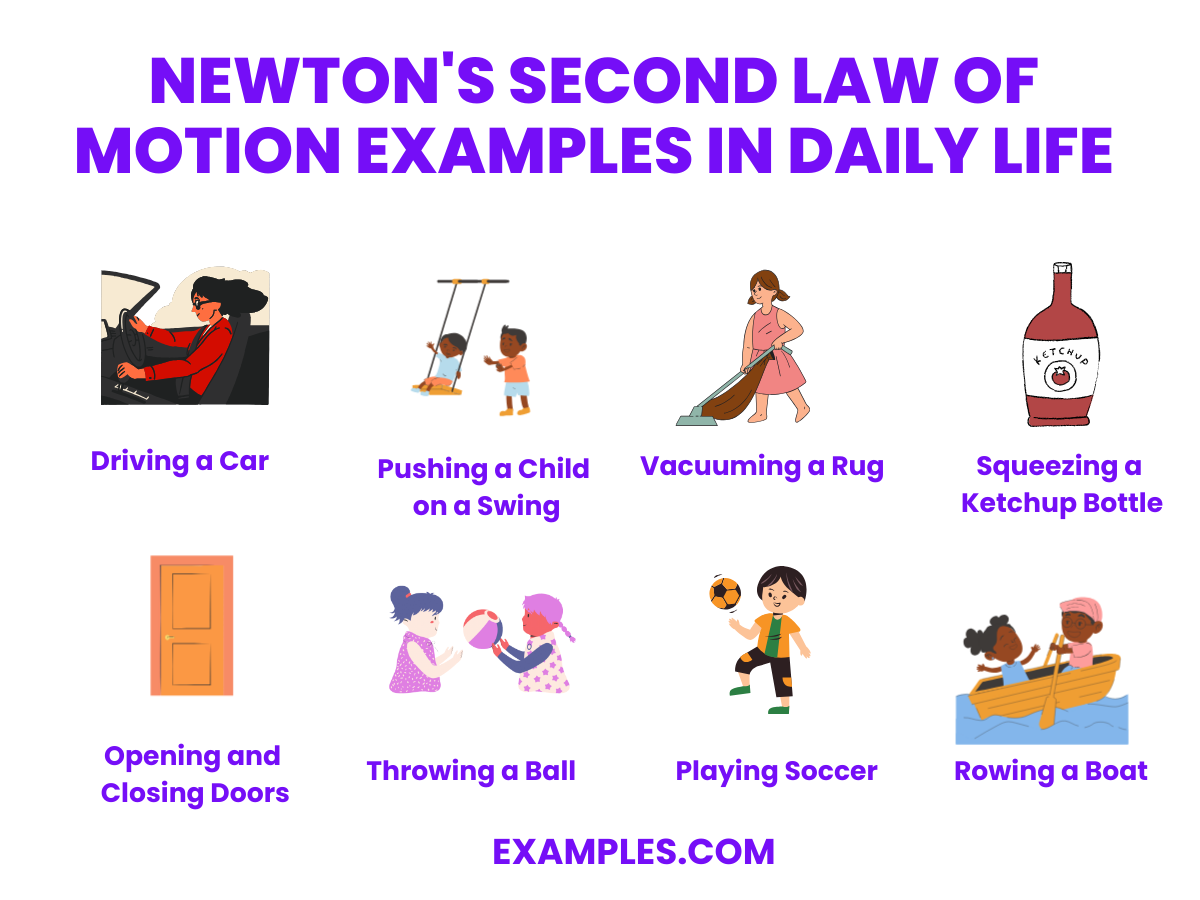
Example or application
An empty shopping cart accelerates more easily than a loaded one under the same push. Kicking a ball harder generally changes its velocity more, although contact time and direction also matter.
Scope and limits
Use consistent units: newtons, kilograms, and meters per second squared. Everyday examples are approximate because forces can change during motion.
Explore the parent hub: Physics, Space and Earth Science
