Sectionalism between north and south
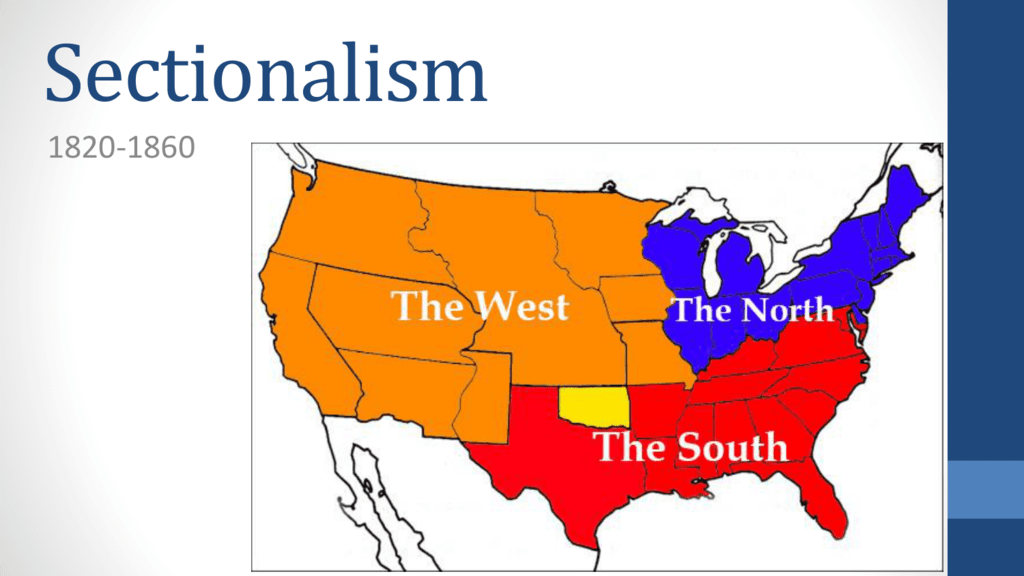
Sectionalism is loyalty to the interests of a region, sometimes at the expense of national unity. In the United States before the Civil War, differences between North and South included slavery, labor systems, economic development, and political power.
Historical context
Disputes over the expansion of slavery into western territories intensified sectional conflict. Compromises temporarily addressed some disputes but did not resolve the fundamental conflict over slavery and the future of the Union.
Example and significance
The Kansas–Nebraska Act, the Dred Scott decision, and the 1860 election contributed to escalating tensions. Southern secession followed, leading to the Civil War.
From disagreement to secession
Regional conflict intensified as the United States expanded westward and Congress debated whether slavery would be permitted in new territories. Political compromises postponed conflict, while violence in Kansas and disputes over federal authority showed how fragile those agreements had become.
Interpretive limits
Sectionalism had economic and political dimensions, but slavery was central to the secession crisis. Accounts that omit slavery distort the historical record.
Explore the parent hub: History, Civics and Military Reference
