Duplication mutation definition
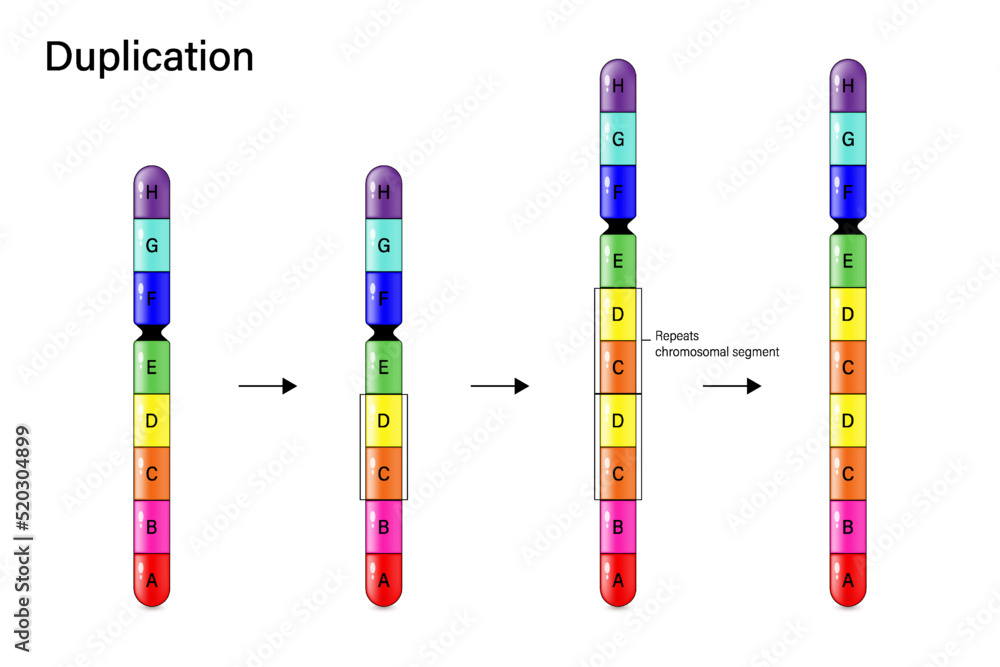
A duplication mutation occurs when a segment of genetic material is copied, leaving an extra copy of that segment. The duplicated material may be a short DNA sequence, part of a gene, or a larger chromosome region.
How it works
Duplications can arise through errors in DNA replication or chromosome recombination. Their effects depend on which sequence is copied, where the copy is inserted, and whether gene dosage or gene function changes.
Example or application
A simple diagram might represent a chromosome as A-B-C-D and show a duplicated C segment as A-B-C-C-D. Real chromosomes are more complex, and a diagram cannot predict a health outcome.
Scope and limits
A duplication is one class of genetic variation, not automatically harmful or beneficial. Interpretation requires the exact location, size, and context.
Explore the parent hub: Biology and Ecology
