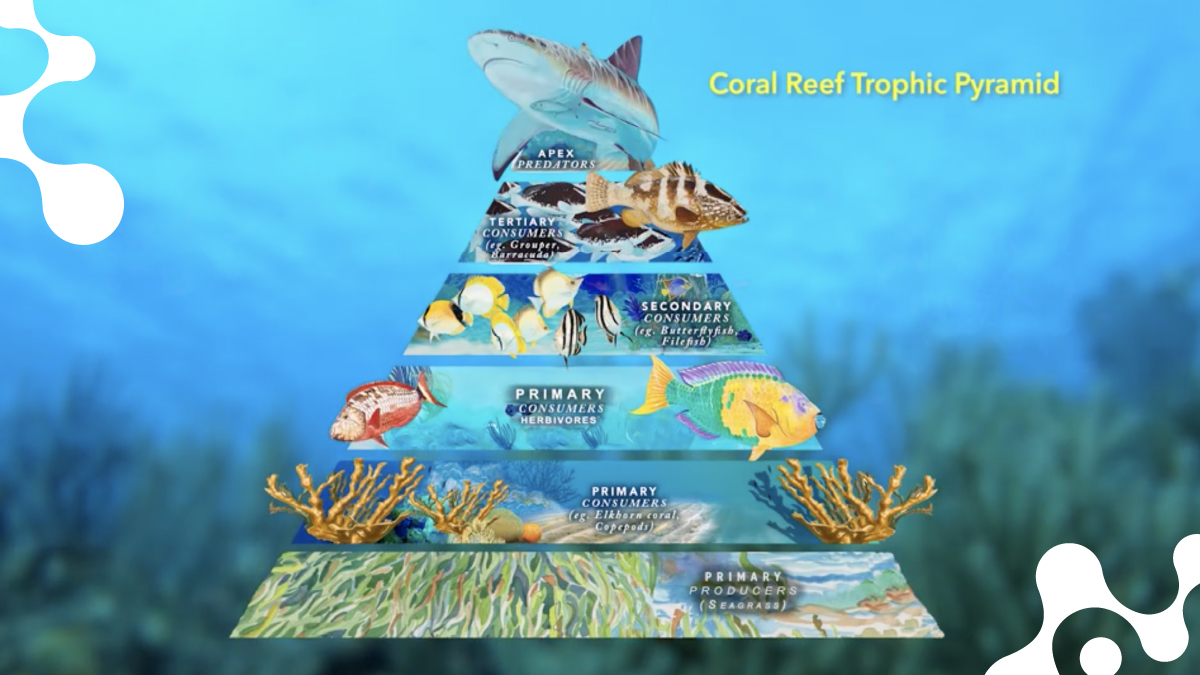
Energy pyramid for coral reef
An energy pyramid represents how much chemical energy is available at successive feeding levels in an ecosystem. In a coral reef, producers such as algae and microscopic phytoplankton capture energy, and consumers obtain some of it by eating organisms below them.
How it works
Energy transfer is incomplete. Organisms use much of the energy they take in for metabolism, movement, and maintenance, and some remains in waste or uneaten material. The energy available to the next trophic level is therefore smaller.
Example or application
A simplified chain might begin with phytoplankton, continue through zooplankton and small fish, and reach a larger predator. Real reefs contain branching food webs, so a pyramid summarizes energy flow rather than every feeding relationship.
Scope and limits
A biomass pyramid and a number pyramid measure different things. In some aquatic settings, producer biomass at a snapshot can look small despite rapid turnover. Do not infer that every reef has the same species or energy ratios.
Explore the parent hub: Biology and Ecology
