Organelle of photosynthesis
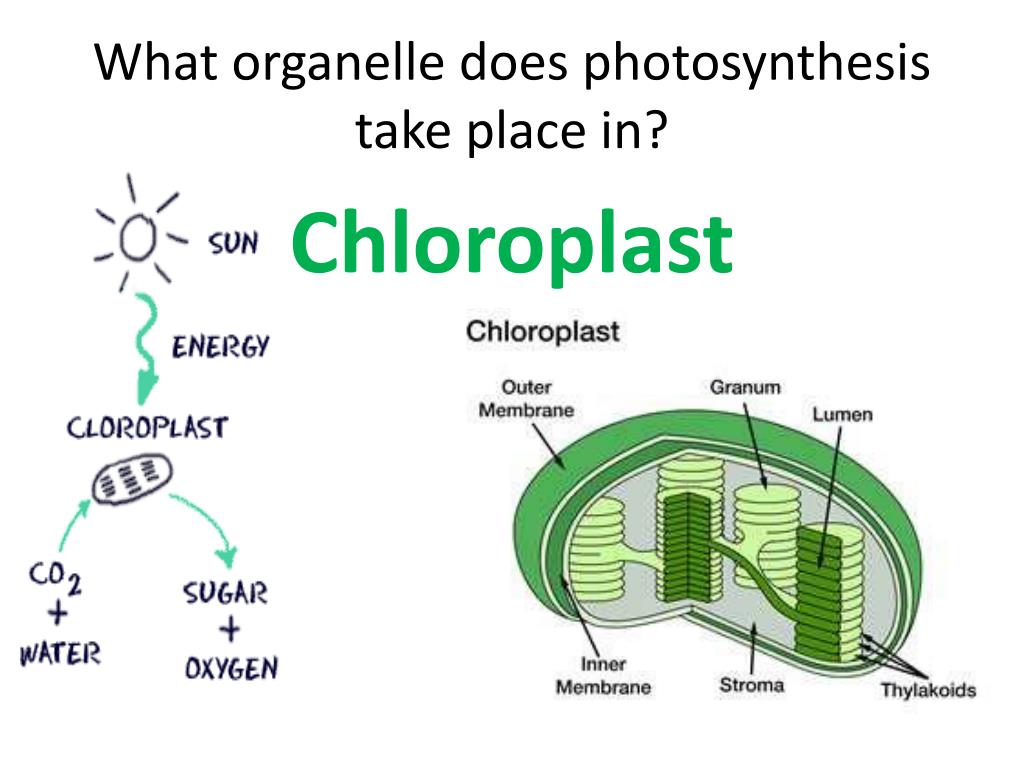
In plants and algae, photosynthesis takes place in chloroplasts. These organelles contain chlorophyll and internal membrane structures that capture light energy and support the reactions of photosynthesis.
How it works
The light-dependent reactions occur in thylakoid membranes. The Calvin cycle takes place in the surrounding stroma, where carbon is incorporated into organic molecules using products of the light reactions.
Example or application
A leaf cell contains many chloroplasts. The chloroplast is the organelle; chlorophyll is a light-absorbing pigment within it. Those terms refer to different levels of biological structure.
Scope and limits
Not every photosynthetic organism has chloroplasts. Cyanobacteria photosynthesize without them, using internal membrane systems.
Explore the parent hub: Biology and Ecology
