Ocet rule
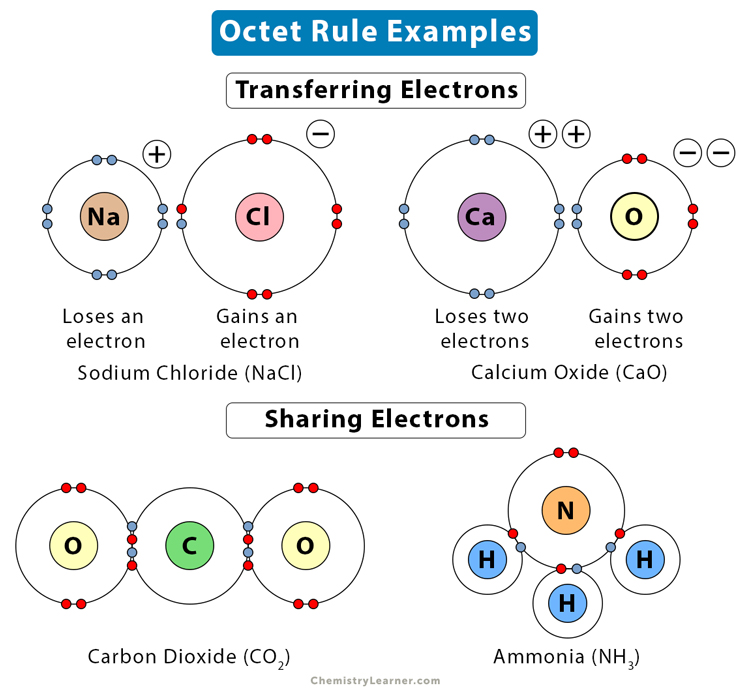
The octet rule is an introductory guideline in which many main-group atoms form bonds or ions associated with eight electrons in their valence shell. Octet is the standard spelling. The guideline is useful, but it is not obeyed by every atom or compound.
Meaning and context
In a Lewis structure, bonding pairs and lone pairs both contribute to the outer-shell count. A shared pair counts toward the valence-shell arrangement of each bonded atom in the usual bookkeeping.
Examples and usage
A simple water Lewis structure gives oxygen two bonds and two lone pairs, for eight electrons around oxygen. Hydrogen follows a two-electron pattern rather than an octet. This shows why the atom’s identity matters.
What to check
Electron-deficient compounds, odd-electron species, and expanded-valence descriptions require additional care. Do not force a chemically incorrect structure merely to put eight dots around every atom. Check total valence electrons, charge, and the model appropriate to the problem.
Explore more: Chemistry and Elements
