What was the monroe doctrine and why was it important
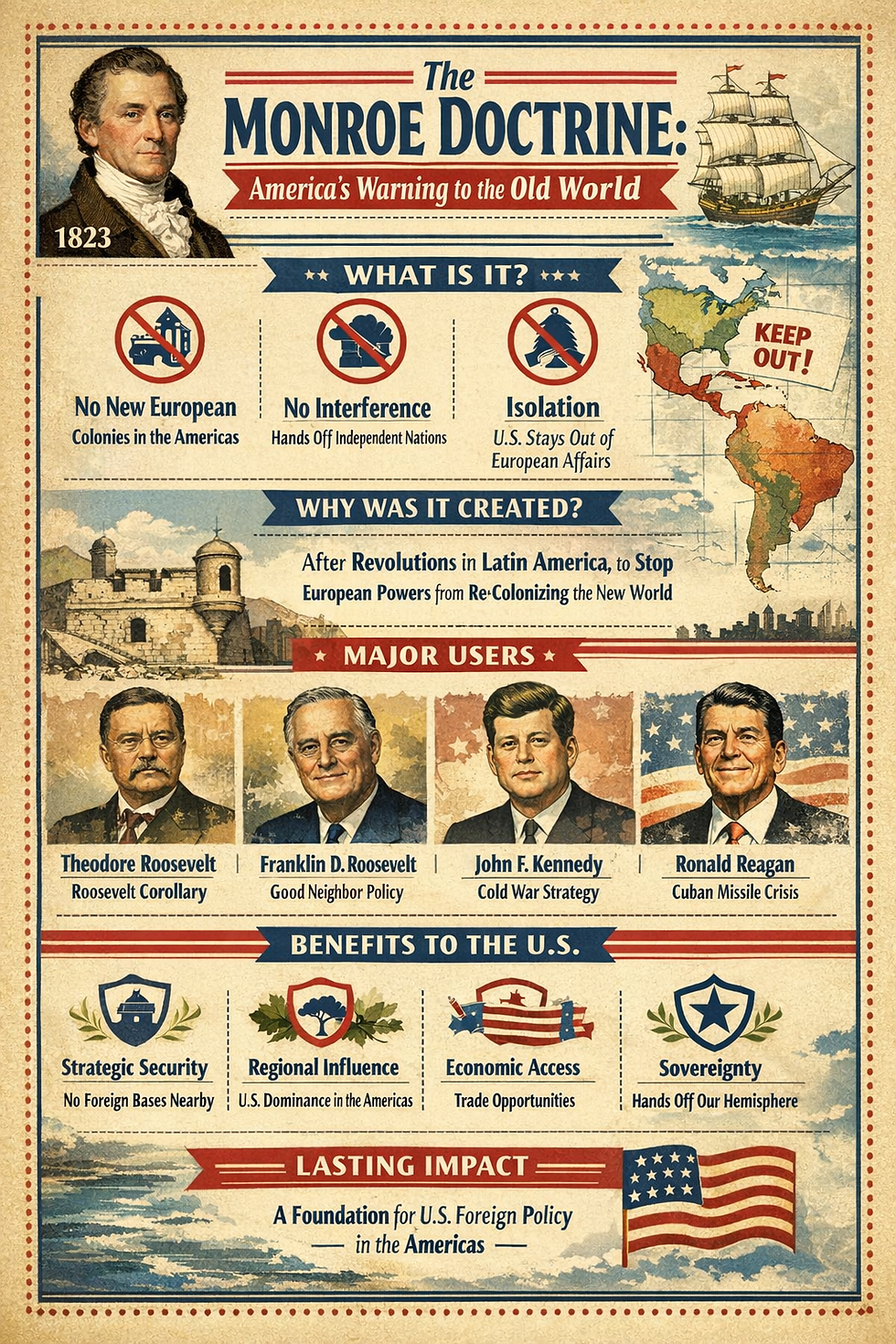
The Monroe Doctrine was a U.S. policy statement announced by President James Monroe in 1823. It warned European powers against establishing new colonies or interfering in the affairs of independent nations in the Americas.
Historical context
The policy also stated that the United States would avoid involvement in European wars and internal European affairs. At the time, the young United States had limited power to enforce the doctrine.
Example and significance
Over time, U.S. leaders interpreted and applied the doctrine in different ways. It became influential in debates about hemispheric relations and U.S. involvement in Latin America.
The 1823 setting
The doctrine came as several Latin American countries had won independence and European powers considered their position in the region. Britain’s interests also opposed renewed European colonization. The United States announced a principle before it had the military strength to enforce it widely.
Interpretive limits
The doctrine’s later uses went beyond its original 1823 message. Explain the date and context when describing what it meant in a specific era.
Explore the parent hub: History, Civics and Military Reference
