Difference chemical and physical change
A physical change alters a substance’s form or physical state without changing its chemical identity. A chemical change produces different chemical substances. The distinction concerns composition, not simply whether the change looks dramatic.
Meaning and context
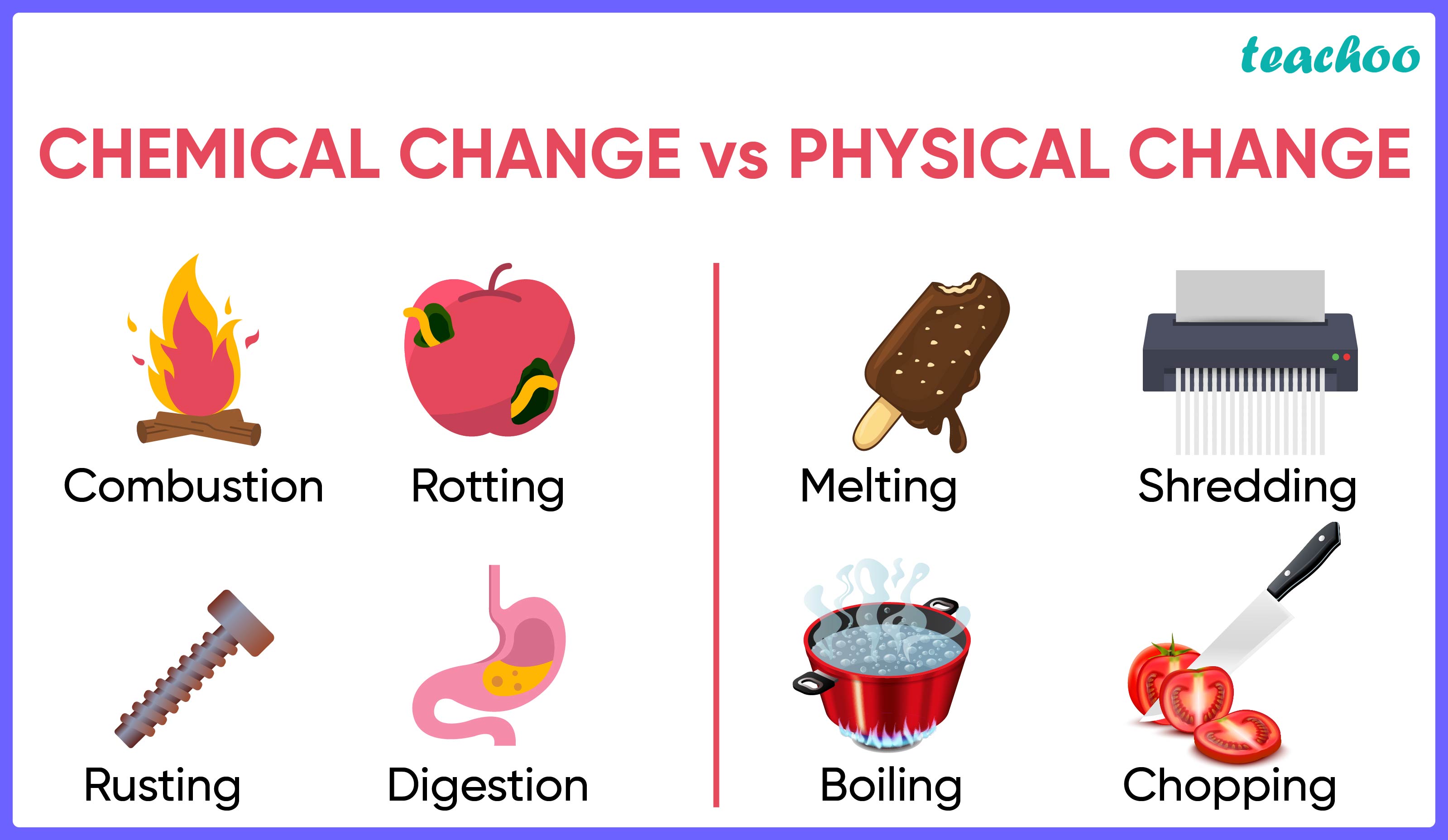
Melting ice is a physical change because the material remains H₂O. Rusting iron involves formation of new substances and is a chemical change. Cutting a sheet of paper changes its size; burning it changes its chemical composition.
Examples and usage
Color changes, bubbles, heat, and precipitates can be clues, but a clue alone is not proof. Boiling water creates bubbles without creating a new chemical substance. The explanation must account for what the materials become.
What to check
Reversibility is not a universal test. Some physical changes are difficult to reverse, and chemical reactions can be reversible. Ask whether chemical identities changed and what evidence supports that conclusion.
Explore more: Chemistry and Elements
