Social structure of mesopotamia
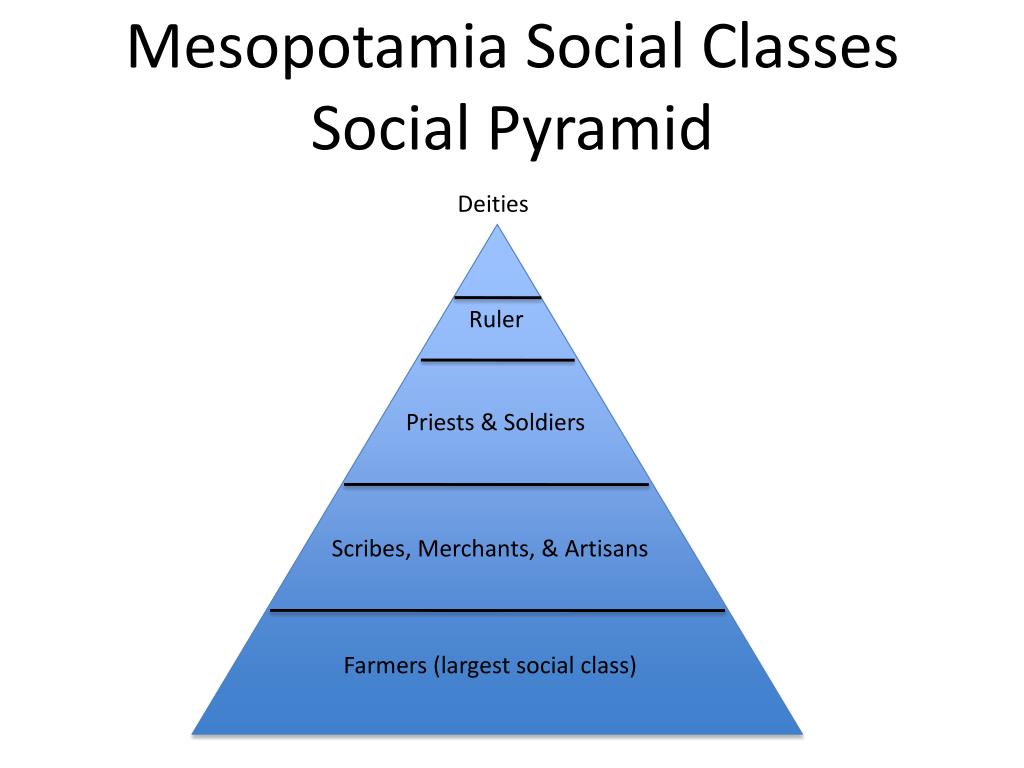
Mesopotamian societies were organized into social ranks that varied by city, period, and law. Rulers and religious officials held authority, while scribes, merchants, artisans, farmers, laborers, and enslaved people occupied different positions.
Historical context
Cities depended on agriculture supported by irrigation, trade, craft production, and administration. Temples and palaces managed land and resources, and writing helped record transactions and obligations.
Example and significance
A simplified social pyramid can show rulers and elites near the top, skilled workers and merchants in the middle, and many agricultural laborers below. Enslaved people were present in some societies, though status and conditions differed.
Why social roles differed
A person’s position could depend on wealth, occupation, gender, legal status, and connection to a temple or palace. Cuneiform records reveal contracts, debts, and work, but surviving documents disproportionately reflect institutions and literate elites rather than every resident’s experience.
Interpretive limits
Mesopotamia covers many civilizations and thousands of years. One diagram cannot represent every city or period, and modern labels should not hide historical variation.
Explore the parent hub: History, Civics and Military Reference
