What does a distributive property look like
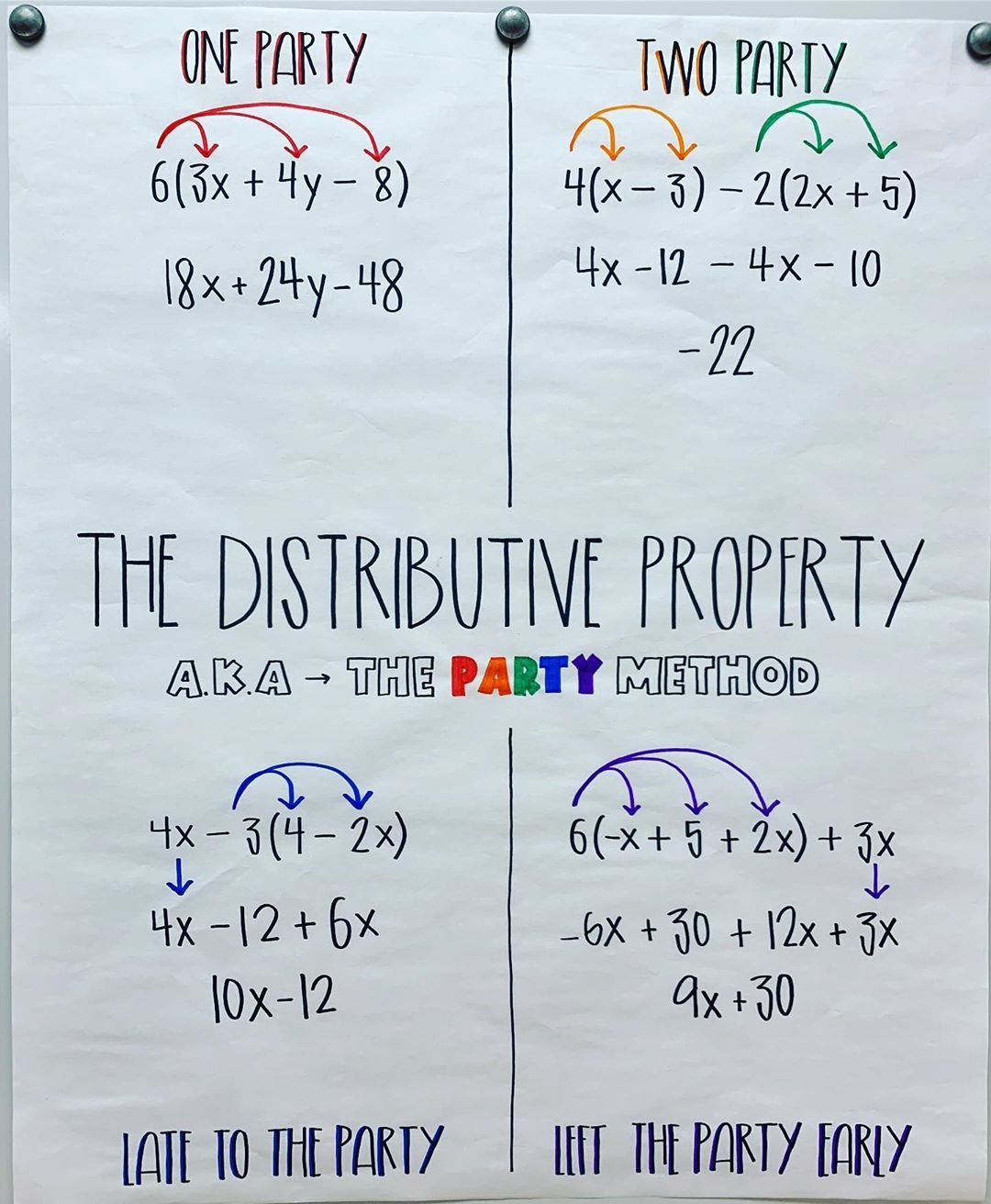
The distributive property lets multiplication apply to each term inside a sum: a(b + c) = ab + ac. It also works with subtraction. Every term inside the parentheses must receive the outside factor.
Meaning and context
For 3(4 + 5), calculate 3 × 4 + 3 × 5 = 12 + 15 = 27. Evaluating the parentheses first also gives 3 × 9 = 27. The equality explains why both methods agree.
Examples and usage
For −2(x − 3), distribute the negative factor to both terms: −2x + 6. The second term is positive because a negative times a negative is positive. Omitting the factor from one term changes the expression.
What to check
Distribution can also be reversed by factoring. From 6x + 9, taking out a common factor of three gives 3(2x + 3). Check the result by distributing again; a valid transformation preserves the value for every permitted value of the variable.
Explore more: Math and Measurement
