Factors of ionization energy
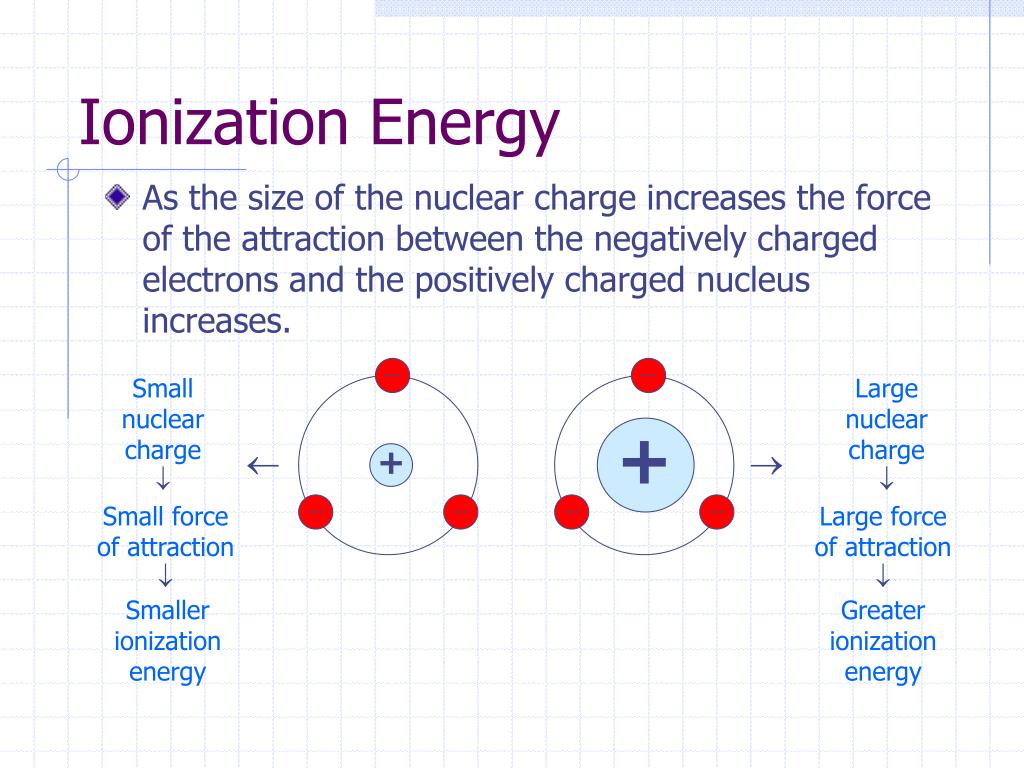
Ionization energy is the energy needed to remove an electron from a gaseous species under the stated conditions. Nuclear charge, shielding, distance from the nucleus, and electron configuration all influence how strongly the electron is held.
Meaning and context
First ionization energy concerns removing the first electron from a neutral gaseous atom. Successive ionization energies concern removal from increasingly positive ions. A large jump can indicate that removal has moved beyond the outer electrons into a more strongly held shell.
Examples and usage
Across a period, first ionization energy generally increases; down a group, it generally decreases. These are trends with meaningful exceptions related to subshell energies and electron pairing. A simple left-to-right arrow is not a substitute for actual data.
What to check
Identify which ionization step and species a value describes. Removing an electron from an ion is not the same process as removing one from a neutral atom. Use the supplied table for numerical comparisons rather than inventing a value from the trend.
Explore more: Chemistry and Elements
