The 1911 revolution
The 1911 Revolution led to the end of the Qing dynasty and the establishment of the Republic of China. The Wuchang Uprising began in October 1911, and revolutionary movements spread across provinces.
Historical context
The Qing government faced internal unrest, reform pressures, and challenges to its authority. Sun Yat-sen became provisional president in 1912, but political power shifted quickly, and the new republic faced continuing conflict.
Example and significance
The revolution is sometimes called the Xinhai Revolution, after the traditional Chinese calendar year. It marked a major political transition, not an immediate period of stable democracy.
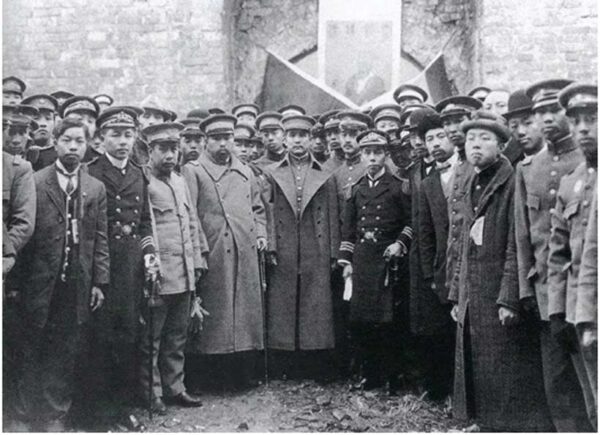
The transition after the uprising
The Qing court agreed to abdication in early 1912, ending imperial rule. Sun Yat-sen yielded the presidency to Yuan Shikai amid negotiations over unification. The republic that followed struggled with regional militarism and political fragmentation, so the revolution’s outcome was contested.
Interpretive limits
The revolution’s causes and consequences were complex. Distinguish the 1911 uprising and 1912 abdication from later political developments in China.
Explore the parent hub: History, Civics and Military Reference
